

Key Pain Points Identified:
Fragmented Coordination
Travel information is scattered across multiple apps, leading to confusion and
repeated discussions.
Compatibility Uncertainty
Users struggle to assess whether potential travel companions share similar expectations, budget,
and pace.
Decision Overload
Group trips often involve excessive back-and-forth communication, slowing down booking and final decisions.
These findings highlighted the need for a structured, unified experience that simplifies coordination while building compatibility and trust.
01. Overview
Problem
Travel planning is highly fragmented. Users rely on multiple tools (WhatsApp, Instagram, Maps, Booking) to organise trips, resulting in scattered information, misalignment within groups, and decision fatigue.
Goal
Design a unified mobile experience that reduces planning friction, improves compatibility between travelers, and supports collaborative decision-making.
My Role
End-to-end UI/UX design - from research synthesis and journey mapping to interaction design, prototyping,
and usability validation.
02. Research & Discovery
I conducted exploratory interviews with solo travelers, couples, and group planners to understand how trips are currently organised and where friction occurs.
Target Users
72%
use 3+ apps
to plan a trip
64%
struggle to coordinate
with friends
58%
feel overwhelmed
by scattered info
A Smarter Way to Find Travel Buddies & Plan Group Trips
A unified mobile solution to match compatible travel buddies and simplify collaborative trip planning.
Solo travelers seeking compatible companions
Couples looking for curated inspiration
Group planners coordinating multiple opinions
03. How Might We...
How might we unify scattered travel tools into a single experience?
How might we improve compatibility between travelers before the trip begins?
How might we reduce decision fatigue in collaborative planning?
05. User Flows
I mapped the primary journeys to reduce friction and clarify decision-making across collaborative travel scenarios.
Two core journeys emerged:
Trip Creation & Coordination
Matching & Connection
Special attention was given to:
Reducing cognitive overload during setup
Clarifying roles within group planning
Structuring compatibility filters to increase trust
04. Solution Overview
Based on research insights, I structured the experience around three core pillars:
FLOW 1 - Trip Creation & Matching
Plan a new trip
Solo
Friends
Community
Set Preferences
(destination · budget · travel style)
🤖 AI-Supported Suggestions
Trip Dashboard
FLOW 2 - Plan & Coordinate
Trip Dashboard
Group Chat & Polls
Shared Calendar & Planning
🤖 AI Conflict Resolution Support
Final Plan & Share
The high-fidelity interface directly reflects this simplified architecture.
06. From Wireframes to Interface
Early low-fidelity wireframes helped validate structure and simplify decision paths before moving into visual design.

Get ready to explore
new destinations!
Best Destinations for you
Join a Trip
My Wishlist
James
Home
Plan New Trip
Chat
Wallet
Maldives
by Alex
Egypt
by Manuka
from € 1.100
from € 500
Camino de Santiago
Japan
from € 2.000
4.8

James
Lorem Ipsum is simply dummy text of the printing and typesetting industry. Lorem Ipsum has been.
James
Travel Highlights
James’ Wishlist
Home
Plan New Trip
Chat
Wallet
Achievements
Countries visited:
12
Trips completed:
8
Travel badges:
3
Map
New Trip
Add Trip
Social Matching
Structured compatibility filters to improve trust and alignment between travelers.
Smart Trip Creation
Progressive steps to reduce complexity during
group planning.
AI-Supported Planning
Contextual suggestions to streamline decisions without removing user control.
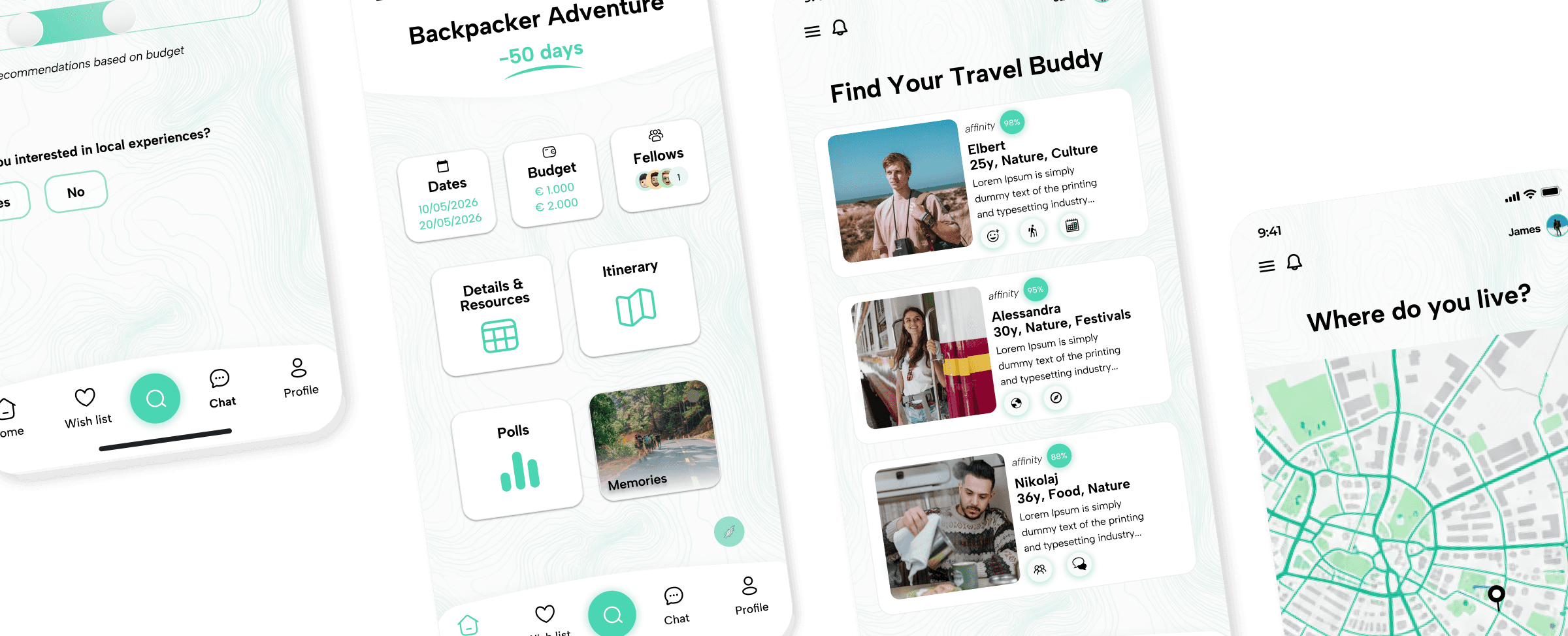
From Structure to Interface
The high-fidelity interface translates research insights and flow simplification into a clear, mobile-first experience. Each screen was designed to reduce cognitive load, strengthen trust, and support collaborative decision-making.
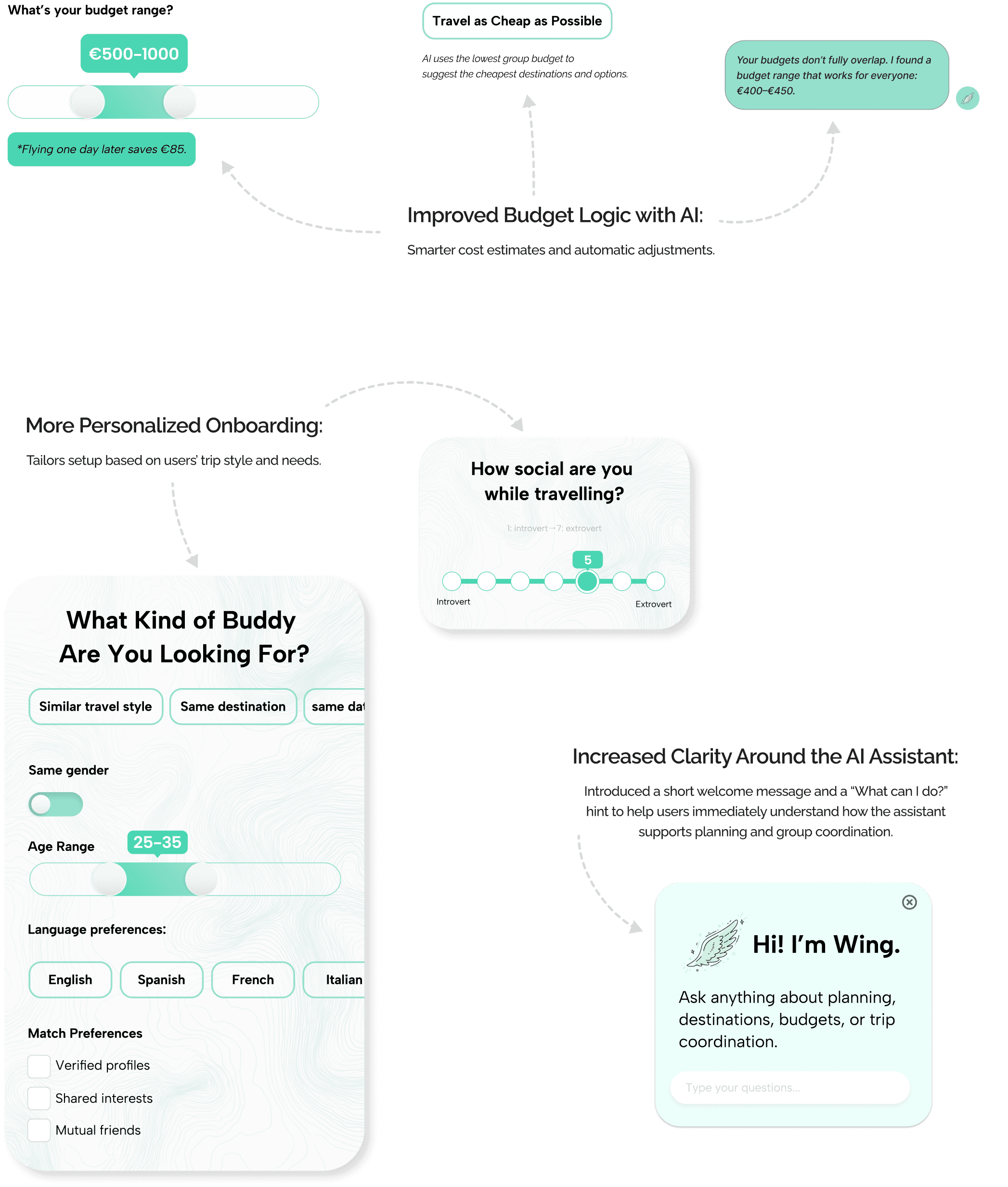
AI Chat Assistant
The AI assistant provides contextual suggestions during planning conflicts or indecision.
Rather than replacing user control, it acts as a facilitator, supporting alignment within the group.
These refinements directly informed the final architecture and interaction model.
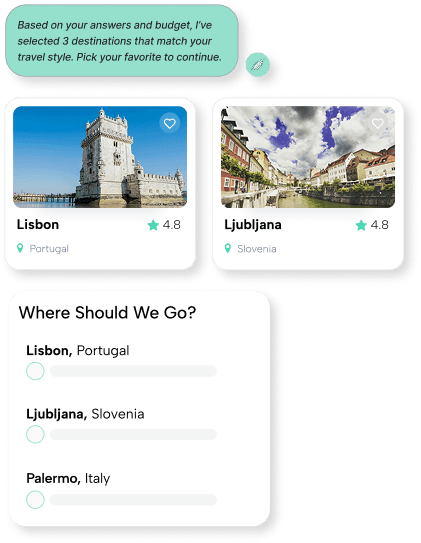
Start New Trip
The onboarding follows a progressive structure to prevent early overwhelm.
Instead of presenting all options at once, preferences are introduced step-by-step, guiding users through destination, budget, and travel style selection.

Hi! I’m Wing.
Ask anything about planning, destinations, budgets, or trip coordination.
Type your questions...
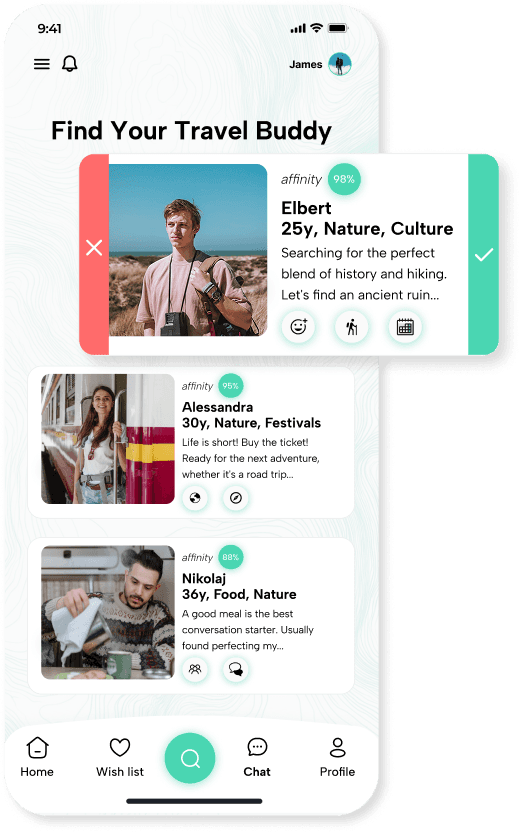
Matching Experience
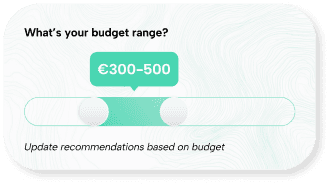
Compatibility filters were structured to prioritise clarity and trust.
Key indicators such as budget range, travel pace, and interests are surfaced early to support faster alignment between users.

07. Iteration & Refinement
Early testing revealed confusion during trip setup and low clarity in compatibility filtering.
09. Accessibility Considerations
Clear contrast between primary and secondary actions
Mobile-optimised touch targets
Structured filtering for easier scanning
Clear labelling to reduce ambiguity
Key takeaways
Trust drives collaborative engagement
Structure reduces planning overwhelm
AI assists,
users decide
Flow clarity
improves usability
08. Measured Impact
Usability testing informed refinements focused on clarity and efficiency.
After simplifying onboarding and restructuring matching logic:
-30%
Reduction in trip creation time
+40%
Improvement in AI assistant usability
7/10 Users
Reported higher clarity
in group coordination